You’ve probably heard of digital marketing. It uses the internet and has become a common way for businesses to reach customers. But what exactly does it involve? Let’s take a look.
What Is Digital Marketing?
Digital marketing covers any marketing done through electronic devices or the internet. It includes promoting products and services using digital technologies such as computers, smartphones, and online platforms. The ads you see on social media and the promotional emails you get from your favorite store are both examples.
How Digital Marketing Differs From Traditional Marketing
Traditional marketing uses media such as newspapers, magazines, radio, television, and billboards to deliver a message. Digital marketing uses the internet and other digital technologies.
Traditional marketing is usually one-way: a company sends a message and the audience can’t respond directly. Think of a TV commercial or a newspaper ad. Digital marketing makes two-way interaction possible. For instance, you can leave a comment on a brand’s social media post or reply to an email.
Digital marketing is also easier to measure. You can see in real time how many people viewed your ad, clicked a link, or made a purchase. Measuring the effectiveness of traditional marketing can be harder and take longer.
Types of Digital Marketing Channels
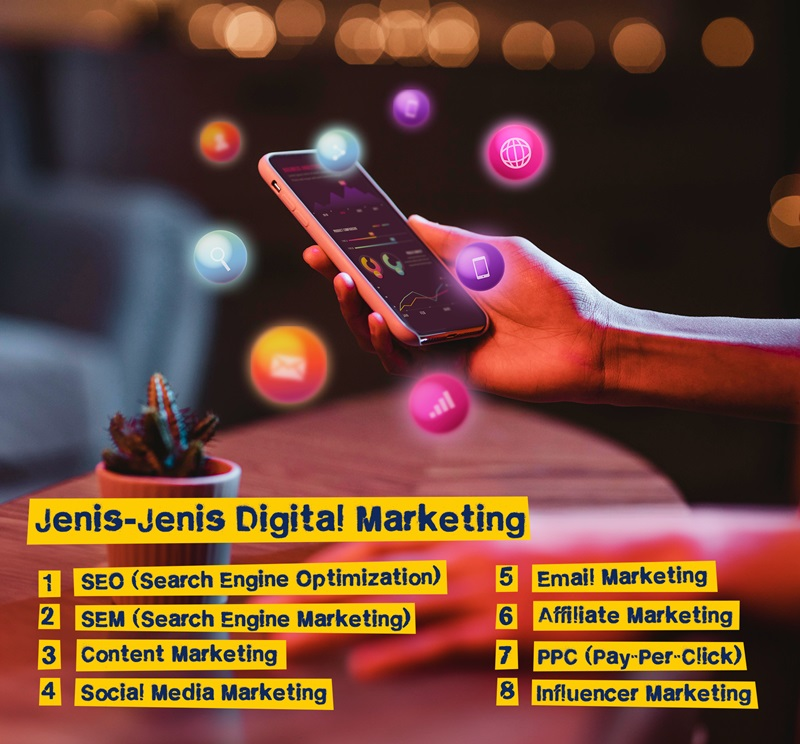
Now that we’ve covered what digital marketing is and how it differs from traditional marketing, here are some of the main channels you can use.
1. SEO (Search Engine Optimization)
SEO means optimizing your website so search engines such as Google can find it more easily. The goal is to rank higher in search results so more people can find your site.
2. SEM (Search Engine Marketing)
SEM is similar to SEO, but here the focus is on paid search advertising. You pay for your ads to appear in search results when someone searches for certain keywords.
3. Content Marketing
Content marketing means creating and sharing relevant, useful content to attract and retain an audience. It includes blog posts, articles, videos, infographics, and more.
4. Social Media Marketing
Use platforms such as Facebook, Instagram, Twitter, and LinkedIn to promote your products or services. You can publish posts, run ads, or interact directly with customers.
5. Email Marketing
Email marketing involves sending promotional or informational emails to customers or prospects. It helps you build customer relationships and promote special offers.
6. Affiliate Marketing
Work with individuals or companies that promote your product and earn a commission on each sale their referrals generate.
7. PPC (Pay-Per-Click)
With pay-per-click advertising, you pay every time someone clicks your ad. Google Ads is a common example: it lets your website or store appear on a Google search results page.
8. Influencer Marketing
Influencer marketing draws on the influence of popular individuals or celebrities on social media to promote your products or services.
Benefits of Digital Marketing for Businesses
Digital marketing is particularly important today. According to webfx.com, more people are spending time and money online, and the internet plays a central role in purchase decisions. There are more than 5 billion active internet users, and 71% of business buyers start their product research with a search engine.
That’s one reason businesses invest in digital marketing to reach new customers, generate more opportunities, and grow revenue.
1. Wider Reach
Digital marketing lets you reach a wider audience without geographic limits. That’s useful if you want to expand beyond your city or even into another country.
2. More Cost-Effective
Digital marketing is often less expensive than traditional marketing. You can start with a small budget and still get meaningful results. You can also set and control ad spending based on what your business needs and can afford.
3. More Precise Targeting
Digital marketing lets you target people by criteria such as demographics, interests, behavior, and location, so your message reaches the right audience.
4. Interaction and Engagement
Digital platforms let you interact directly with customers. That can build loyalty and help you understand their needs.
5. Analysis and Measurement
Analytics tools make it easier to measure how well your campaigns are working. You can track ad performance, see what works, and adjust as needed.
6. Adaptability and Flexibility
Digital marketing lets you respond quickly to shifts in the market or consumer trends. You can change your strategy or campaign as needed.
7. Greater Brand Awareness
With the right strategy, digital marketing can make more people aware of your brand. The more people know and remember it, the more likely they are to become customers.
Digital marketing offers advantages for businesses of all sizes. If you haven’t tried it yet, now is a good time to explore your options and see how they can help your business. Happy marketing!